
Reflections on the 19th International Docomomo Conference
By Luke Leuschner, 2025 Recipient of the Docomomo-US/Northern California Travel Grant
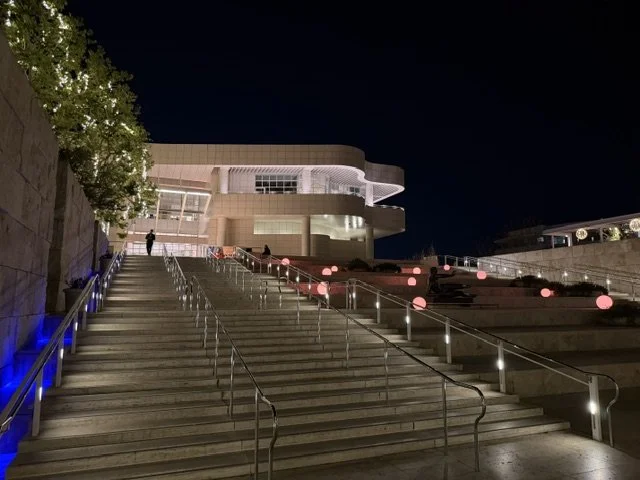
Getty Center. Photo by Luke Leuschner
There seems to be a persistent belief that modernism is defined by its indifference to place, history, and climate. It is the “white box” that has landed on some plain. The 19th International Docomomo Conference, which I had the privilege of attending, seemed determined to dispel this notion amidst the sprawling, sunbaked landscape of Los Angeles. Altogether, the conference made the point that “modernism” is not any one thing, but a dynamic and complex movement developed by many actors. A few emergent and oft-cited themes appear — restraint, technology, and reform — but local adaptation prevails.
The conference’s selection of panels made this point most of all through an international range of case studies. I found myself seated in the daily session devoted to “Modernism in the Sun,” which detailed how architects have long worked to address climate-related issues. For instance, Professor Miguel Calvo Salve’s study of Marcel Breuer’s precast concrete facades demonstrated the Bauhaus-trained architect’s strides to mitigate heat gain (it seems he was rather successful in this endeavor), while Kalpanee Jayatilake’s survey of the works of Geoffrey Bawa illustrated an extensive legacy of regionalism while also acknowledging its complexity and connections to colonial logic.
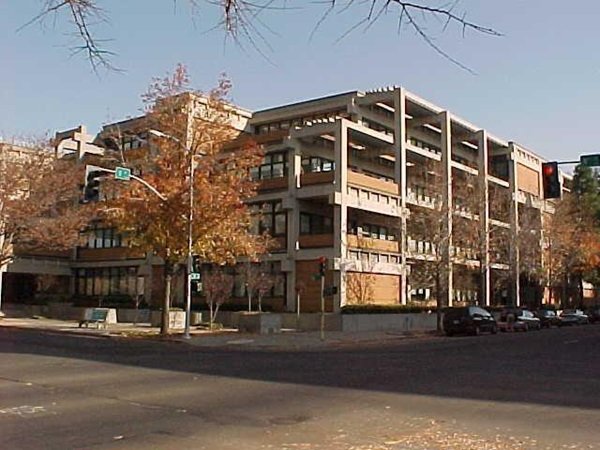
Gregory Bateson Building. Photo from dsg.ca.gov
The novelty of many innovative works presents formidable challenges for those seeking to preserve them. What makes Docomomo unique is its dual focus on history and conservation, and other papers detailed the conservation challenges presented by these novel approaches. The recent restoration of Sacramento’s Gregory Bateson building, a pioneering attempt by architect Sim Van der Ryn at passive architecture, had to address a highly engineered structure that had fallen short of its expectations, much like the plan for the rehabilitation of Corbusier’s museum in Chandigarh. Likewise, a presentation on the restoration of Frank Lloyd Wright’s textile blocks (which was foregrounded by his memorable observation that concrete “would not” degrade) showcased another regional innovation now fraught with conservation contingencies.
The setting of Los Angeles, spotted with works by RM Schindler, Richard Neutra, Irving Gill, and many others interested in progressive ideals and regional variation, was more than apt for a conference devoted to themes of climate, community and creativity. Moreover, the many tours demonstrated how the city has long sought (if struggled) to define itself through architecture. The works of Paul R. Williams, the pioneering Black architect whose works are found throughout the city and soon to be the subject of a comprehensive retrospective, flawlessly move between the modern, moderne, and revival. Likewise, the works of Charles Moore, subject of another thorough tour, show an architect recycling and reassembling both the motifs of the modern movement and the image of California. The Beverly Hills Civic Center (1981-90), a personal favorite from the tour, is a structure that blends Spanish Revival, Art Deco, Churrigueresque, and many other influences into a composition that is playful, eclectic, and, above all, “Californian” in its willingness to invent and reassemble.
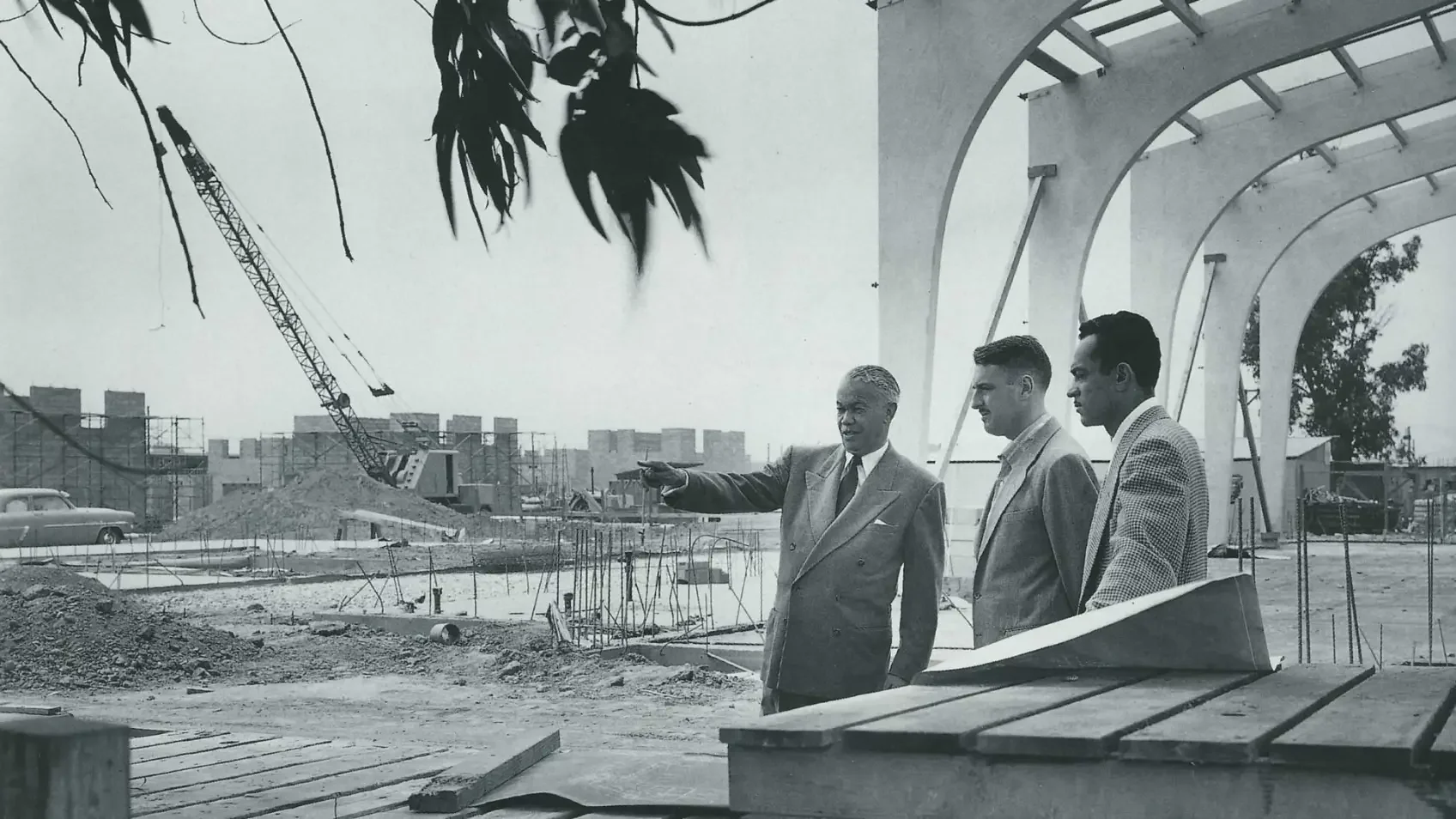
Paul R. Williams, architect. Photo from pbssocal.org
Overall, the 19th IDC provided a rare, extended opportunity to study and think about architectural history. Docomomo Northern California’s travel grant afforded me the opportunity to attend and partake in the week’s events: I parked myself in USC’s lecture halls for the conference’s many panels, I donned a baseball cap and followed historians through some of the city’s greatest architectural sites, and met any number of friends, colleagues, and like-minded preservationists. At the closing reception, as the Getty hummed with the sound of hundreds of chatting preservationists and Los Angeles glowed below, I found myself feeling particularly indebted to the many people and organizations who have studied, supported, and fought for the built environment.